When this service is useful
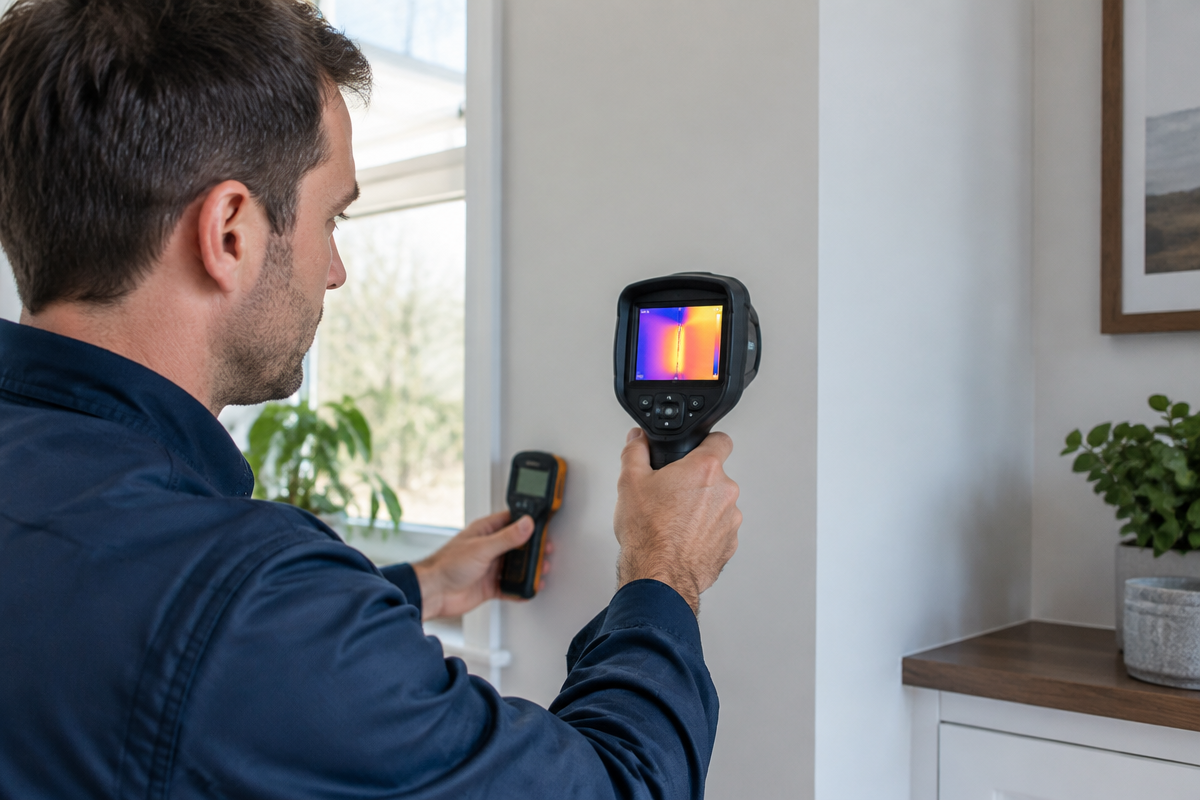
Useful for surveying broad accessible areas and tracing patterns after a leak. A thermal camera does not directly detect mold or moisture.
What the service involves
- 1Scan accessible surfaces under suitable conditions.
- 2Compare patterns rather than relying on a single image.
- 3Check suspicious areas with a moisture meter or direct observation.
- 4Document relevant images with inspection context.
What findings can and cannot establish
A thermal camera detects surface-temperature differences—not mold and not moisture directly. Sunlight, HVAC operation, insulation, airflow, and reflective surfaces can create similar patterns.
What you can expect to receive
- Relevant thermal images when they aid the investigation
- Locations selected for verification
- Associated moisture observations
- Clear explanation of uncertainty and limitations
Scope, timing, and pricing factors
A responsible scope depends on the property and question. Factors that can affect the visit include:
- Temperature difference across surfaces
- Building operation and sunlight
- Material accessibility
- Need for verification with another method